

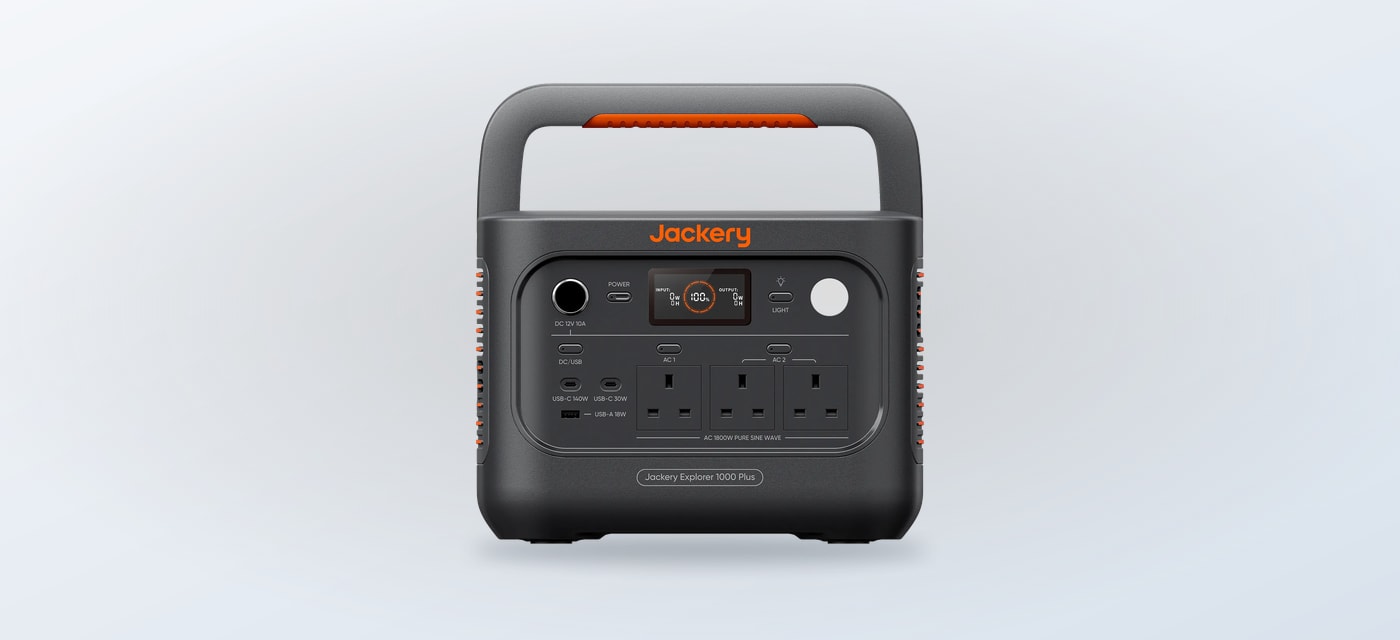
When the clocks go back and the evenings turn cold, a power cut or a weekend away can make a charged phone feel like the least of your concerns. The useful question is which portable power setup fits the devices you actually need to keep running.
Jackery’s range spans compact stations for lighter loads and larger expandable models for more demanding backup. Solar panels add another route to recharge, but shorter days and changeable weather matter in a UK winter.
This guide uses product details listed on Jackery’s store for the UK. We focus on capacity, output, expansion and practical seasonal limits rather than assuming one station suits every household or trip.
Some links in this article are affiliate links: if you make a purchase through them, we may receive a small commission.
What you need to know: The Explorer 1000 Plus v2 is the more compact starting point, while the Explorer 2000 Plus v2 offers more capacity and rated output for larger loads. Pair either only with compatible accessories, and treat solar as a variable supplement in winter rather than a guaranteed daily recharge.
Start with the load
Winter planning is less about choosing the biggest battery and more about listing what must stay powered. Small essentials have a different draw from a fridge, kettle or workshop tool from a fridge, kettle or workshop tool. Jackery lists capacity in watt-hours and output in watts; both figures matter. Capacity is stored energy, while output indicates what the unit can supply at once.
Before comparing models, write down the appliances, their wattage and how long they need to run. Check whether an appliance has a high start-up demand as well. The product page’s rated output does not by itself promise a particular runtime: real use depends on the devices, conversion losses and operating conditions.
- Keep essentials together: note router, lighting, phones and any medical equipment that needs power.
- Separate high-draw appliances: check their running and start-up requirements against the station’s output.
- Decide your recharge plan: consider mains access, vehicle charging and available daylight.
A lighter setup
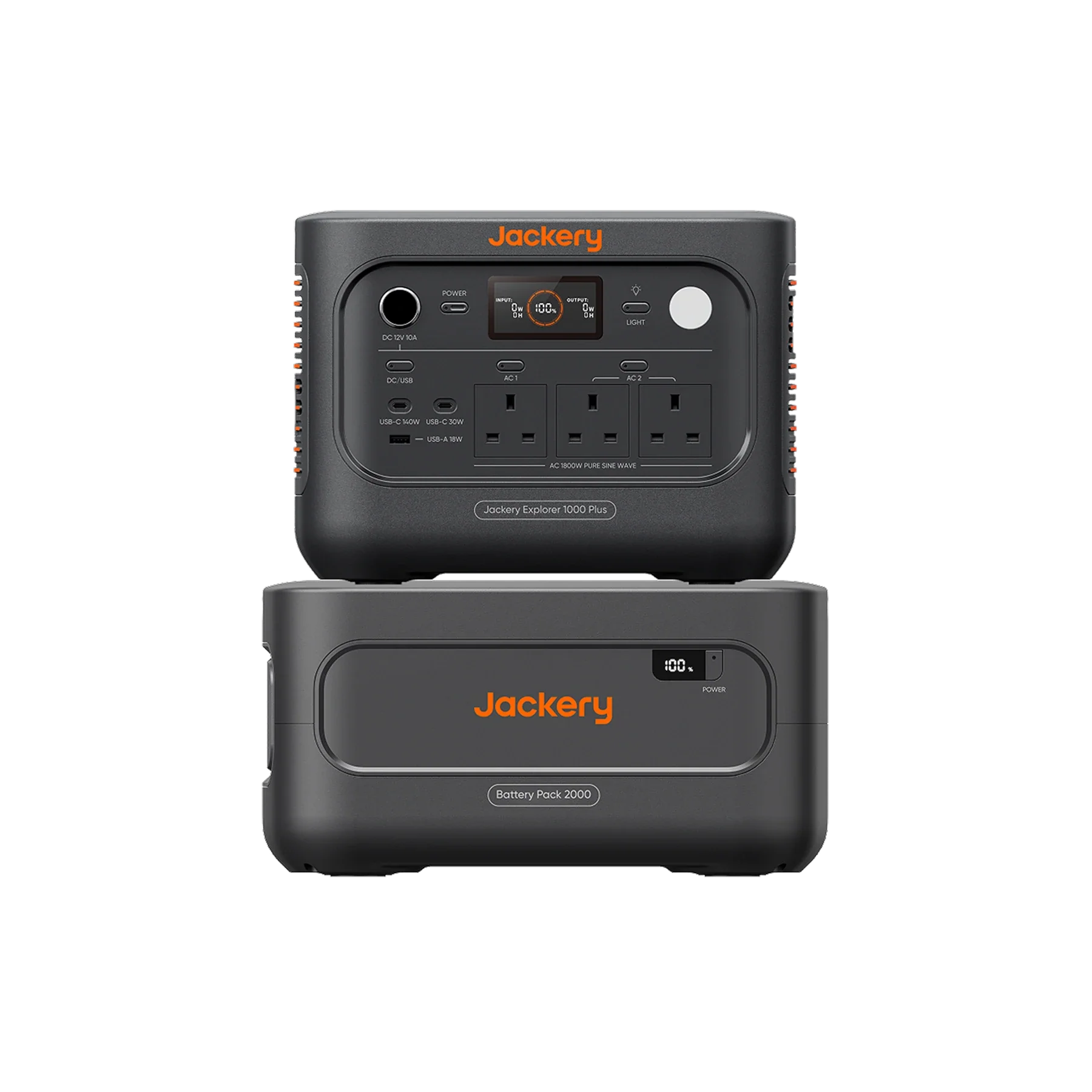
The Jackery Explorer 1000 Plus v2 is listed with 1024Wh capacity and 1800W rated output. Jackery describes it as expandable up to 11kWh with compatible battery packs. That makes it a flexible starting point for a campervan, garden workspace or a household prioritising communications, lighting and other moderate loads during an interruption.
Its smaller starting capacity gives a more manageable entry into expandable backup, though adding batteries changes the footprint and total spend. Confirm the exact kit contents on the Jackery Explorer 1000 Plus v2 product page; bundles can include different accessories. For winter trips, a larger battery does not remove the need to plan around device consumption and safe storage.
The model supports independent AC control through buttons and the Jackery app, according to its product listing. That can help manage which connected equipment is drawing power. Readers comparing smaller alternatives should also check the Explorer 1000 Plus v2 configuration against their appliance list before choosing.
More capacity for home
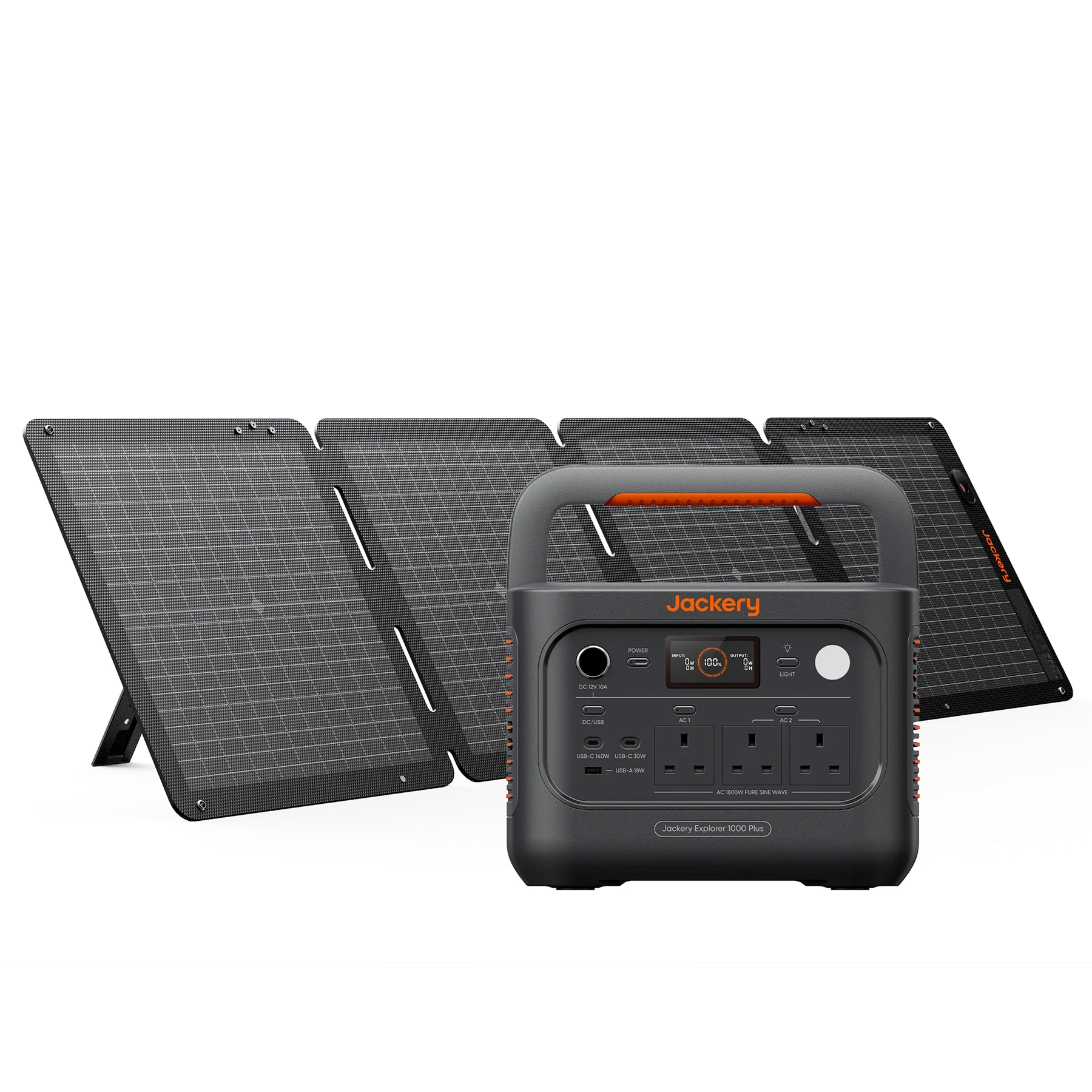
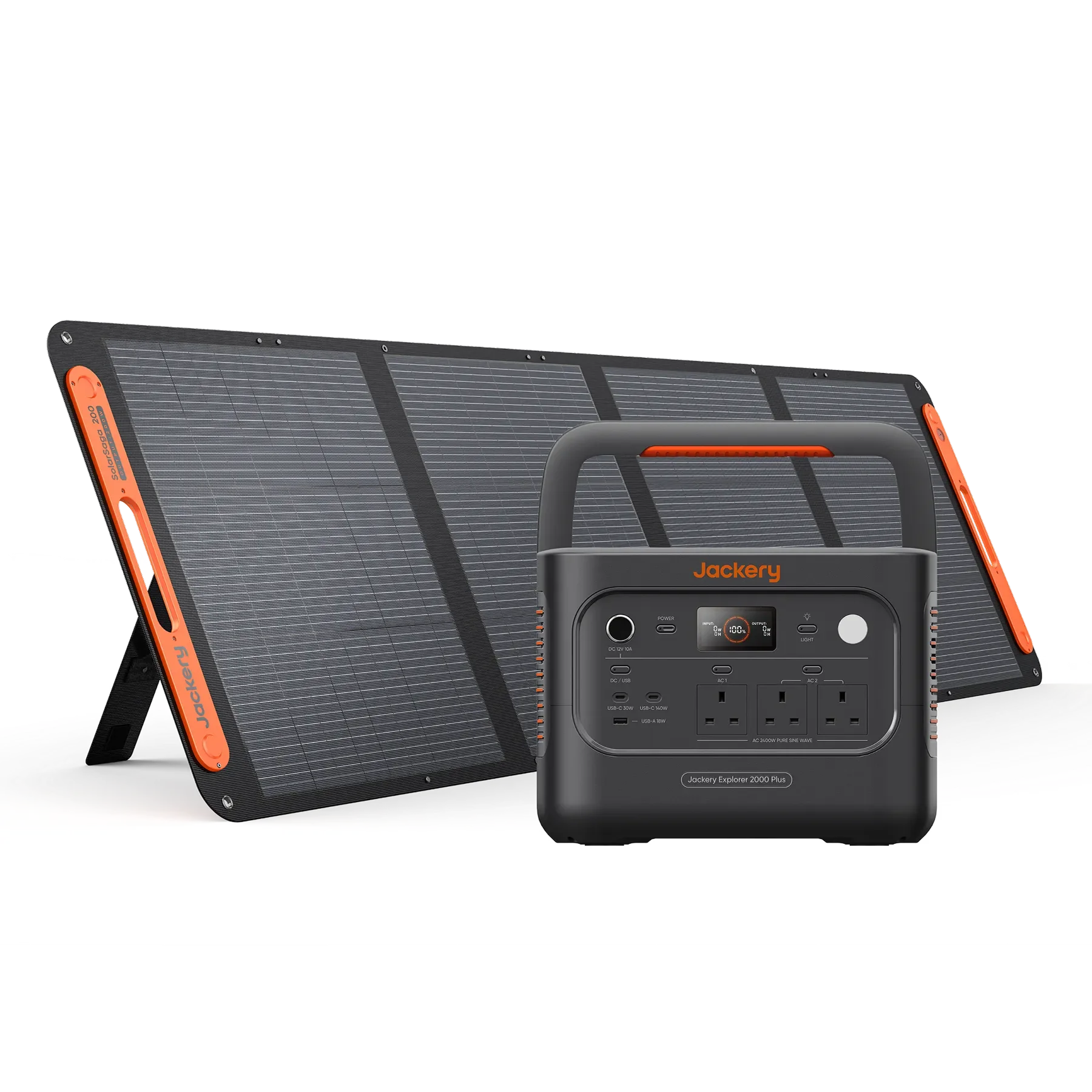
For more demanding needs, the Jackery Explorer 2000 Plus v2 starts at 2048Wh and lists 2400W rated output, with expansion up to 12kWh. Jackery names refrigerators, microwaves, coffee makers, routers, workstations and fans among possible loads. Those examples are not a promise that every appliance will run for a fixed duration; check the equipment’s requirements and plan the runtime conservatively.
The larger model makes more sense when the priority is keeping several essentials available or supporting higher-draw devices. Its higher capacity comes in a larger starting configuration than the 1000 Plus v2, and expansion batteries add further equipment to store and move. Review the Explorer 2000 Plus v2 specifications and the exact contents of the chosen package before deciding whether the extra capacity is useful.
- Choose the 1000 Plus v2 for a more compact station and moderate everyday loads.
- Choose the 2000 Plus v2 when the load list needs more capacity or higher rated output.
- Expand later only if needed after checking supported battery packs and the cost of the complete setup.
Solar in short days
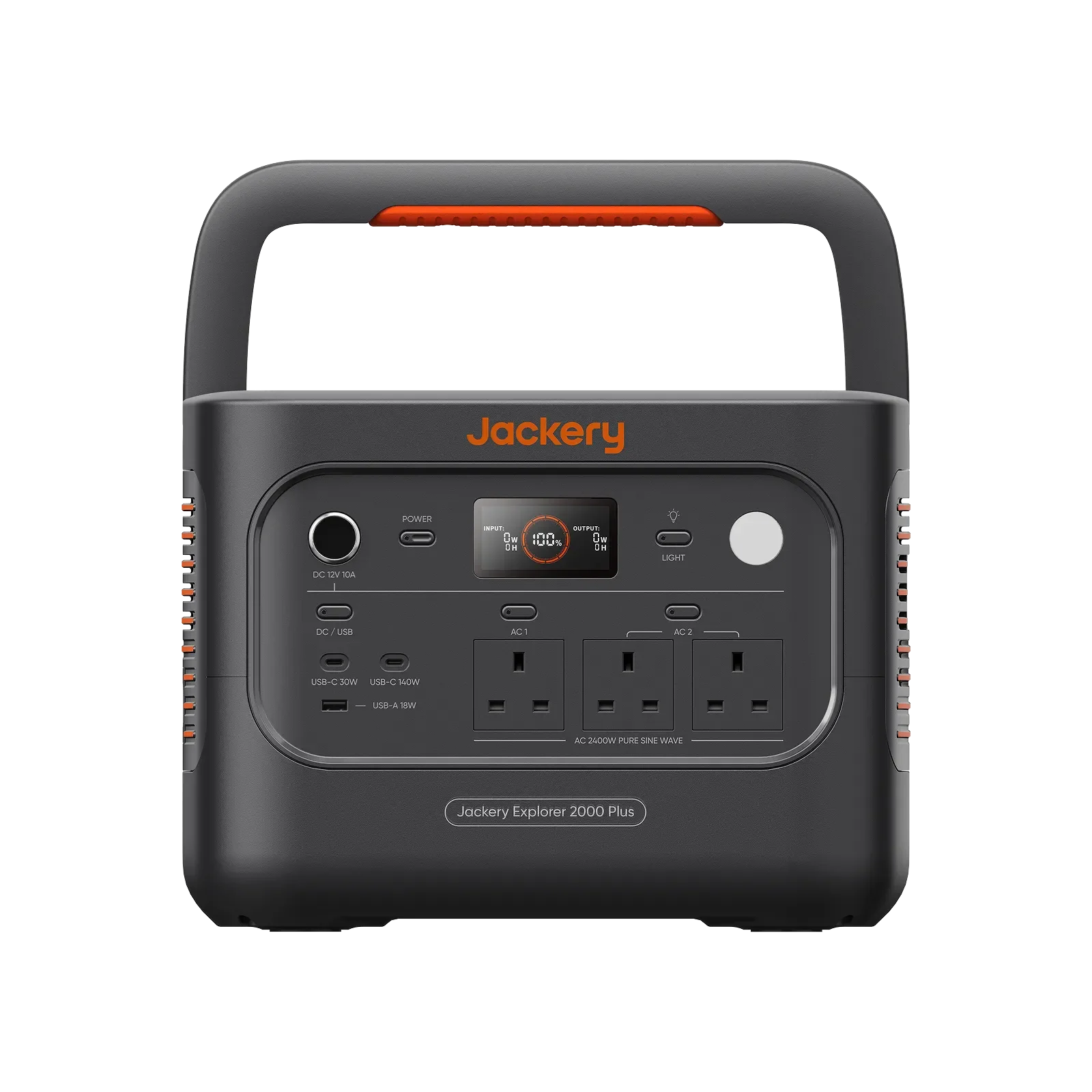
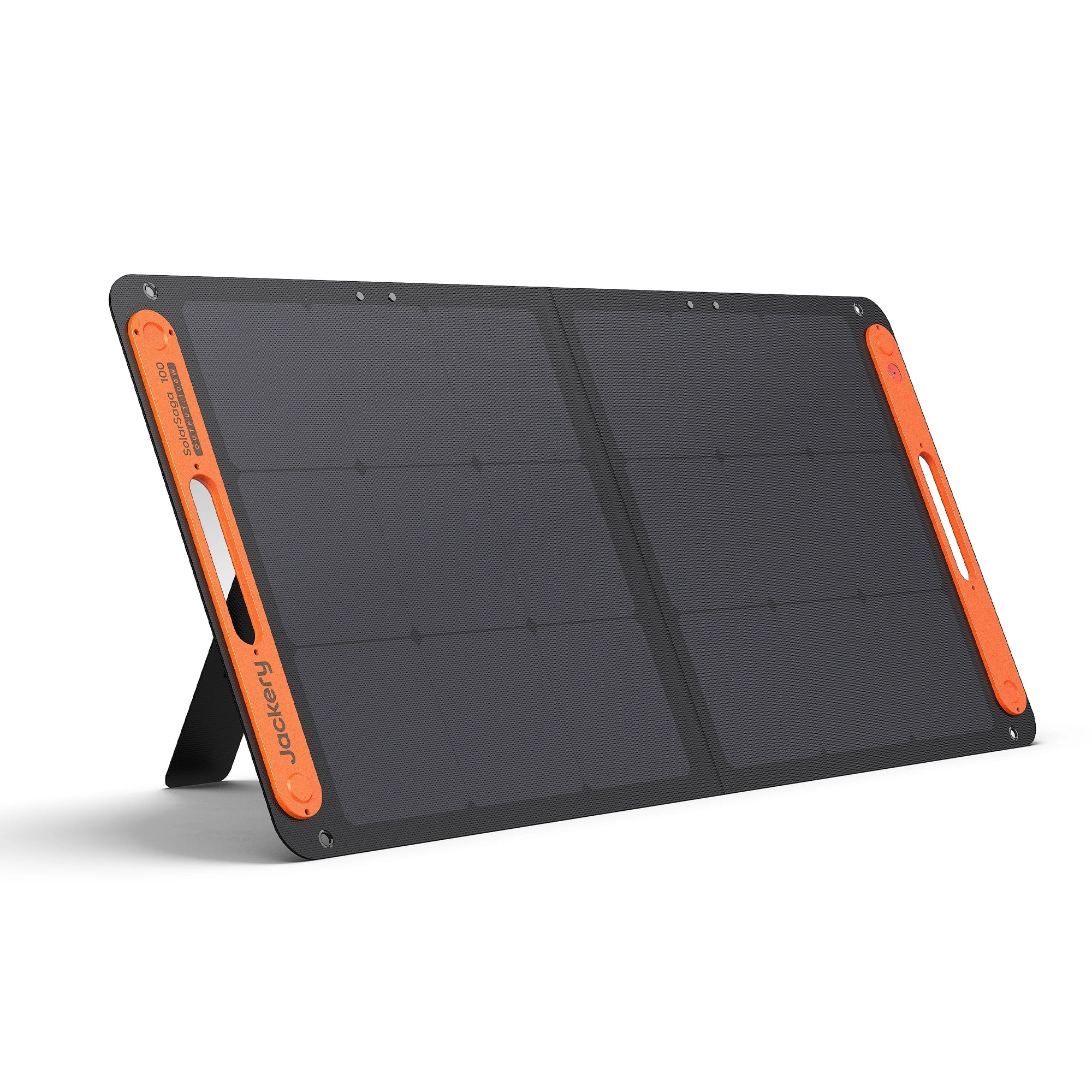
The Jackery SolarSaga 100W Solar Panel is a foldable panel with two kickstands, a carry handle and a listed conversion efficiency of up to 25%. It is a portable option for topping up compatible stations outdoors. The phrase “up to” matters: panel angle, shade, cloud, temperature and the short winter daylight window all affect what it can collect.
For autumn and winter use, plan around mains or vehicle charging where available and treat solar as a helpful extra. A panel left in weak light will not necessarily replace the energy used overnight. Check connector and station compatibility on the SolarSaga 100W UK product page before pairing it with a power station.
- Place the panel where it receives the clearest available light and adjust its angle as conditions change.
- Keep cables and connections arranged to avoid trip hazards and standing water.
- Use the station’s compatibility guidance and avoid relying on an optimistic solar estimate for essential backup.
Compare the options
The quick comparison below is a starting point, not a substitute for checking the current UK listing. Package contents and compatible add-ons can vary. In particular, an included panel or battery may change the overall setup, so compare like with like.
| Option | Listed capacity | Best fit | Consider |
|---|---|---|---|
| Jackery Explorer 1000 Plus v2 | 1024Wh | Moderate loads, portability | Expansion adds size and cost |
| Jackery Explorer 2000 Plus v2 | 2048Wh | Higher loads, longer backup | Bulkier starting setup |
| Jackery SolarSaga 100W | 100W panel | Portable solar top-up | Winter yield varies |
The best starting point for a small essentials list is generally the Explorer 1000 Plus v2. For loads that need more headroom, compare the Explorer 2000 Plus v2. Pair either with a panel only after checking compatibility and expected winter charging conditions. Jackery’s UK pages let readers review the SolarSaga 100W details alongside each station’s options.
Before choosing
Cold weather brings a few practical considerations beyond the spec sheet. Follow Jackery’s operating and storage instructions for the specific model, protect equipment from rain and damp, and keep a station in a ventilated location. A power station is not a substitute for a professionally installed home backup system, and essential medical devices deserve a dedicated continuity plan.
Use this short checklist when comparing current configurations:
- Confirm which devices need power and their combined demand.
- Choose capacity based on the hours of backup you need, not a vague “whole home” goal.
- Check solar input limits, compatible panels and included cables.
- Review dimensions, weight, warranty terms and any installation or storage guidance.
These checks also make price comparisons more useful: compare the same station capacity and accessories, then verify the current listing because product bundles can change. View the Explorer 1000 Plus v2 details, the Explorer 2000 Plus v2 details and the SolarSaga panel information on Jackery’s store for the UK.
Common questions
Can a solar panel fully recharge a station in winter?
It depends on sunlight, panel orientation, shade and the battery’s size. Short days and overcast conditions can sharply reduce solar input, so plan another charging route if reliable backup is important. Jackery lists the SolarSaga 100W panel as a compatible charging option for supported stations; check the product details for the specific pairing.
Which Explorer model is better for a power cut?
Match the model to the device list. The 1000 Plus v2 has lower listed capacity and output than the 2000 Plus v2, so the larger station offers more headroom. Neither page can tell you a precise runtime without knowing the connected load.
Do the listed bundles include everything?
Not necessarily. Product pages may offer a station alone or combinations with panels, batteries and cables. Read the selected configuration carefully and check the included accessories and compatibility notes before checkout.
Where this leaves you
For a seasonal backup plan built around communications, lights and moderate loads, start by checking the Jackery Explorer 1000 Plus v2. If your list includes larger appliances or you want more reserve capacity, compare it with the Explorer 2000 Plus v2. Solar can extend flexibility outdoors, but its output is the main winter limitation: it cannot be treated as dependable replacement for grid charging through dark, cloudy spells.
We recommend deciding from a written load list and the exact UK bundle, then checking compatibility and current pricing directly with Jackery. The figures above describe the brand’s listings, and real runtimes vary with use and conditions.
